
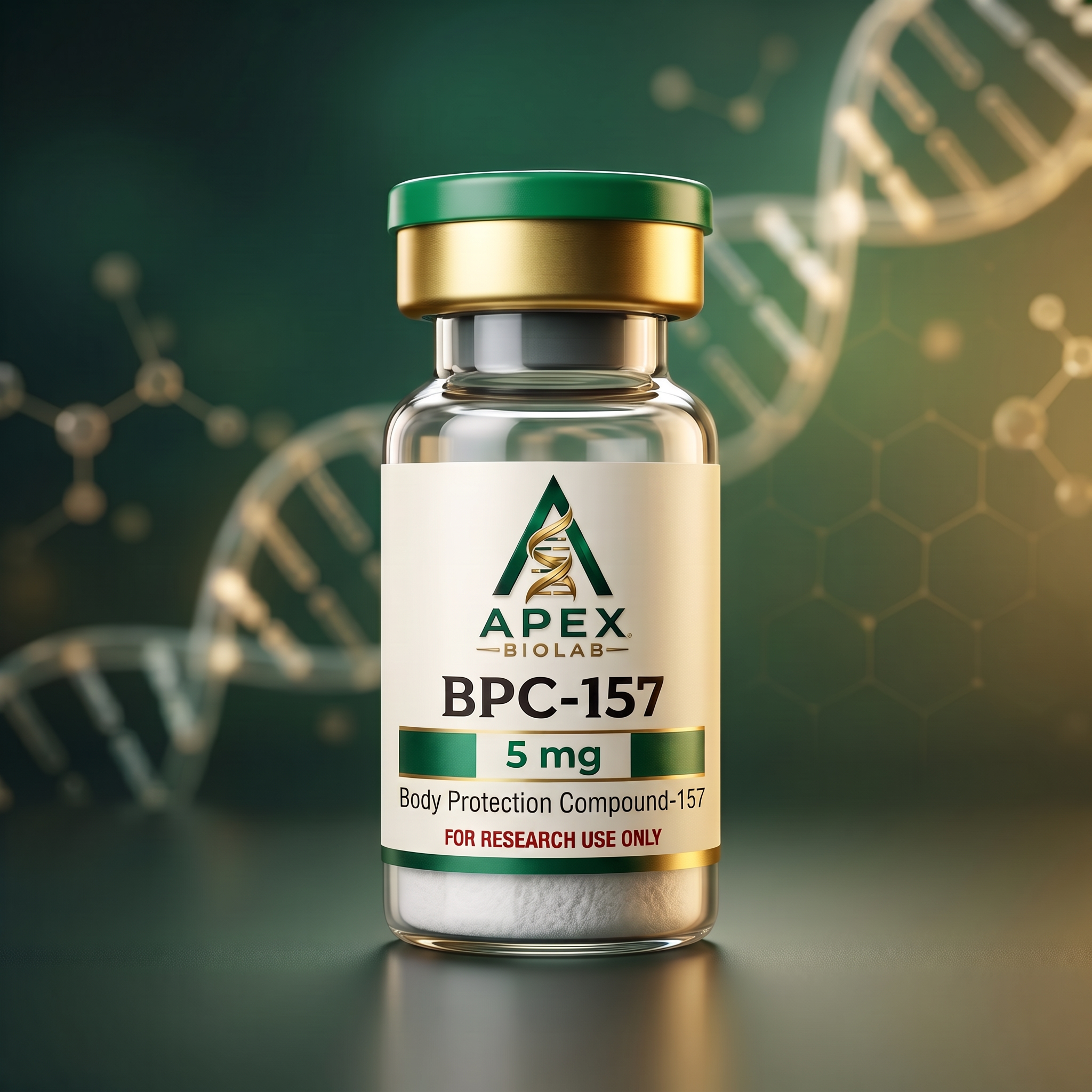
BPC-157
Peptide fragment studied for stomach and digestive health, and the repair of tendons and other connective tissue.
For Research Use Only
Sold strictly for laboratory research. Not for human or veterinary use, ingestion, or clinical/diagnostic application.
The lower price is applied automatically once your cart holds 5 or more of this vial.
Bacteriostatic water included
About this peptide
BPC-157 is a laboratory-made peptide made up of 15 amino acids and based on a protective protein found in the stomach. Researchers study how it may support the stomach lining, blood-vessel signalling, and the repair of tendons, ligaments, and other connective tissue. Most of this research has been carried out in animal and laboratory models.
Why researchers reach for BPC-157
Connective tissue focus
Widely cited in tendon, ligament and muscle-injury rodent models.
GI barrier studies
Referenced for gastric and intestinal mucosal integrity work.
Angiogenic signaling
Preclinical data suggest VEGFR2 pathway involvement.
Key features
- ≥99% HPLC purity
- Stable pentadecapeptide sequence
- Mass-spec confirmed identity
- Cold-chain shipped
How it works
Growth factor cross-talk
Modulates VEGF, FGF and EGR-1 signaling in vitro.
Nitric oxide pathway
Interacts with NO system in vascular endothelial studies.
Cytoprotection
Reduces markers of oxidative stress in animal GI models.
Research dosage guidelines
Reference ranges only — reproduced from published preclinical literature. Not a recommendation for human use.
| Range | Reported dose | Note |
|---|---|---|
| Typical reconstitution | 2 mL bacteriostatic water | Yields 2.5 mg/mL (2500 mcg/mL) |
| Reported research range | 200–500 mcg/day | Reference only |
Tracking this compound? Registered researchers can log active BPC-157 protocols in their private Research Log.
Timing in research protocols
No human timing data; short half-life in animal pharmacokinetics.
- No human trials have been published; a 2025 pharmaceuticals review notes the absence of comprehensive clinical studies.
- Rat and dog pharmacokinetics show an elimination half-life under 30 minutes, with intramuscular bioavailability around 14–19% in rats and 45–51% in dogs.
- Frequent, split daily dosing seen in circulating protocols is an inference from that short half-life, not a tested schedule.
- No evidence-based time of day, meal relationship or cycle length exists.
Drawn from published research protocols and pharmacology literature. Reference information for laboratory research only — not an instruction or guidance for use.
Technical specifications
- Sequence
- GEPPPGKPADDAGLV
- Molecular weight
- 1419.5 g/mol
- Purity
- ≥99% (HPLC)
- Form
- Lyophilized powder
- Vial size
- 5 mg
- Storage (lyophilised vial)
- Cool, dry and protected from light
- Storage (after reconstitution)
- 2–8°C
Published research
Peer-reviewed literature on BPC-157. Links open in a new tab.
Research use notice
Sold for in vitro laboratory research only. Not for human or veterinary use, diagnosis, or therapy.